Unstashing Portugal sip by sip: a diary of sunshine & cocktails

Updated: Jan 25
Dive into the world of alcohol tourism as Spirits Consultant, Stuti Khetan, explores Portugal through glasses of artisanal liquor and its vibrant culture.

The monuments, museums, food, and streets of Portugal were exactly as lively as they had been described to me–timeless, artisanal and verdant. The postcard images matched my camera roll perfectly. Sunny, textured, full of movement. But I've always been a firm believer in exploring a country through its local bars, where stories unfold between craft brews, bar nibbles, and engaging chatter.
And I had an entire month of spending days like these in Portugal; you can only imagine the spell this country had cast upon me! Drinking moments showed up everywhere–in celebrations, in pauses, in weathered traditions, and in ordinary routines. Somewhere between Lisbon, Madeira, Porto, and the Douro Valley, Portugal began to make sense to me through what it poured.
Lisbon: drinks on the house!
I had just landed in Lisbon with a small backpack and a very large laptop bag, navigating my way to the hostel through a combination of buses, colourful trams, and long stretches on foot.
It was a particularly rainy day, and when it poured for the seventh time that hour, I finally sought shelter. Something caught my eye–what seemed like a shoe shop at first turned out to be a cocktail bar. My favourite kind of establishment. Sneaky, playful, and very "Lisbon."

As I walked into the place, a displayed board introduced me to the in-house game of the day. The hook was simple. Guess three styles of Port wine blind. Ruby, Tawny, and Vintage. Get all three right and win a signature cocktail. Standing there with the tasting flight in front of me, I paid attention in a way I had not planned to. Texture, sweetness, weight, age–everything. Without the reassurance of labels, the wines demanded to be understood on their own terms. It felt like a fitting way to begin this journey. Needless to say, I won the cocktail.
Community in a glass

Seixal introduced itself very differently. I stayed in the north-western corner of the island of Madeira for just over twenty days. With a population of a couple of hundred people, I quickly grew familiar with the local bars, traditional food, and the post-surf traditions. At the Banzeira bar, the Poncha–a potent cocktail crafted with the use of Maderia rum, citrus, and honey–had already been poured before I arrived.
"Each Poncha bar has its own recipes and may serve different flavours. Poncha's base comprises fruit content, the Madeiran sugarcane rum and honey, so it's fun to play around, making it a perfectly versatile drink," says Mario, Bartender at Benzeira bar.
A large tray of colourful shots lined the counter. The crowd felt like the entire village had gathered inside. Slowly, I realised this is routine. Rainy afternoons, weekends after days of harrowing work, match days, or just another Tuesday evening–alcohol consumption is not just a means of stress release, it's a loved activity.
Coming to the Poncha, it was sharp, warming, and deceptively easy to drink. I told myself I'd stop at one. I did not. People did not come here to escape their day. They came to share it, and so did I. Movies/matches projected on the village wall outside, singing and dancing in the narrow spaces between tables, stories overlapping, laughter rising and falling. It became clear that Poncha was never the point; it was simply an excuse.
Heritage beats trends: Madeira rum
If Poncha showed me how rum thrives socially, Madeira rum showed me its roots. Named after its place of origin, Madeira Island, this spirit holds a special place in every local's heart.
Pedro Ferreira, Owner at O' Reizinho, welcomed me into his distillery with quiet generosity. He walked me through the space, explained processes that had been developed and redeveloped over time, opened bottles that were never meant for display, and spoke about rum the way people speak about family.
Madeira rum is agricultural, related to French agricole styles, but shaped entirely by its island. Ocean air, volcanic soil, carefully sourced sugarcane. The result is expressive, precise, and unmistakably local. His brand, O 'Reizinho, which means The Little King, carries a family story. It was named after Pedro’s great-grandfather born premature and baptised in haste because survival seemed unlikely. The priest named him "little king" in heaven. He lived to ninety-four, had fourteen children, and left behind a legacy that now lives on in liquid form.
Ferreira ages all his rums in ex–Madeira wine casks. Each one has its place and suits a different moment. When asked to choose, he points to the six-year-old cask strength. Tasting it reveals a structured, layered confidence that unfolds slowly and deliberately.
Wine that grows with the island
Vines grew everywhere on Madeira. Outside my hostel. Along walking trails. Reaching toward the ocean. Behind houses and shops, growing alongside fruit trees and kitchen gardens. They did not feel ornamental or curated. Just practical. Present. Part of the island’s everyday rhythm.
Shaped by steep slopes, volcanic soil, ocean winds, and a climate that refuses consistency, the vines adapt because they have to. They climb high, clinging to terraces and growing where land allows rather than where convenience suggests. Vineyards were a common sight.
Delving into Portugal's history of winemaking, sweetness is always held firmly by acidity. They are deliberately exposed to warmth. Developing layers of nut, citrus peel, caramel, and smoke that make it last for a much longer time than you’d expect of still wine.
Mario also spoke about the various ways they make spirits accessible for the locals to try. "For example, during the typical Saint Martin holiday, when we try this year's first wine, we make a wine tasting, showcasing wines developed by local families and groups, throwing light on how each production differs. Along with this, we make a fire, roast chestnuts and enjoy them with the wine, which is customary during this holiday."
Ginja and dancing at the Christmas market
When I flew back to mainland Portugal, it was late, and I expected everything to be closed. Instead, I stumbled upon the last days of a Christmas market and found a world still wide awake. Young crowds gathered around stalls serving meat, bread, and hot drinks. Between stalls of mulled wine and hot chocolate, I found Ginja. Sticky, sharp, and warming. Music spilled onto the street. People started dancing. I joined without thinking.
The Ginja may have had something to do with it. The drink mattered far less than the
moment it created.
Coffee and tart mornings
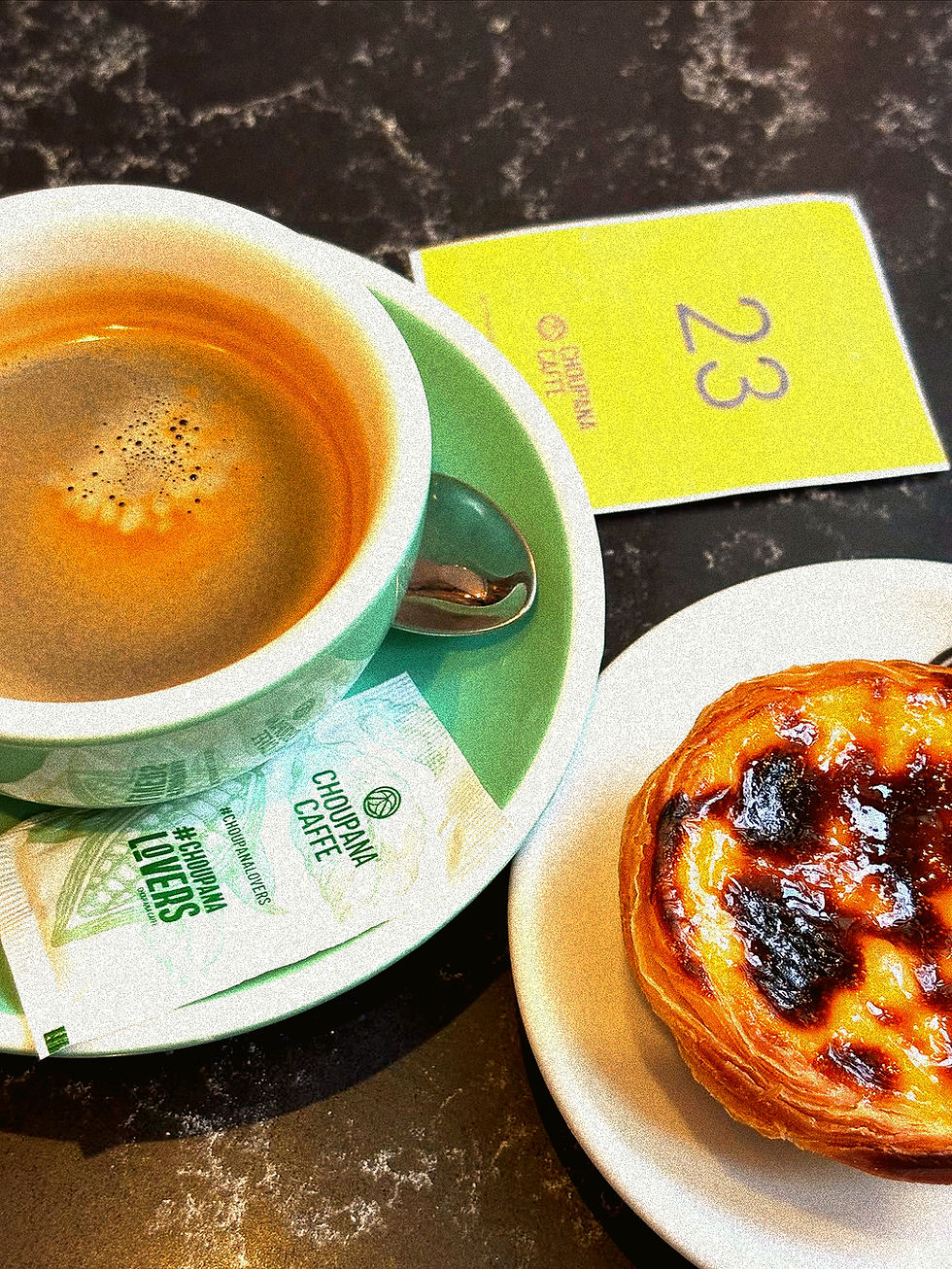
Every morning, without planning it, I found myself repeating the same ritual. A chino
(cappuccino) and a pastel de nata (Portuguese egg custard tart)–sometimes standing on the counter, sometimes sitting by the window, sometimes in silence, sometimes surrounded by the entire café. Over a month, it became routine. Familiar faces. Familiar movements. No checklist. No urgency. Those mornings anchored the days.
The grand finale: Douro Valley

Visiting Portugal as an alcohol enthusiast, and more importantly, as a drinks professional would be incomplete without a trip to Douro Valley: the birthplace of Port wine, and the first region to be classified for quality globally.
However, the spirit connoisseur in me was quickly overtaken by the traveller in me. Steep schist terraces rose sharply from the river, best viewed from the river itself. A short cruise made the geography clear in a way roads never could. From the water, the scale of the vineyards, the gradients of the slopes, and the positioning of the quintas (port wine-houses) become immediately legible. The river here bound the valley together.
Port production begins with indigenous grape varieties, often grown in mixed plantings. This merged with old traditions like foot treading during fermentation, is what creates flavours that cannot be replicated anywhere else in the world. Without getting too technical, ageing determines the style: Ruby, Tawny, and the pricier Colheitas that come from a single
harvest. The two wineries I managed to visit - Quinta da Roêda and Quinta da Avessada graciously hosted me through their facilities, and also offered a splendid lunch pairing along with a lineup of the different styles of Port that definitely motivated me to dive even deeper in the world of fortified wines in the future.
The takeaway
By the time I left Portugal, I had absorbed each of these products into my everyday lifestyle. Through Port, Poncha, rum, wine, liqueur, coffee, and quiet routines, I learned how people gather, how history is carried forward, and how warmth is shared without excess (or maybe with).
And that, for me, is cultural literacy.